
Answer
This unit converter changes US kitchen measures, lengths and weights into metric and back, using the exact factors published by NIST. One US cup is 236.6 mL, and one inch is exactly 2.54 cm. For cups or ounces to grams, pick the ingredient, because a cup of flour weighs far less than a cup of honey.
Other free tools
How we check this tool
Sample problems are worked by hand and compared with the tool before each update. Editorial policy
Where the numbers come from
The converter uses the definitions in NIST Handbook 44, Appendix C. The inch is defined as exactly 25.4 mm, and the foot as exactly 0.3048 m. The US gallon is defined as 231 cubic inches, which works out to exactly 3.785411784 liters.
The smaller kitchen measures are fixed fractions of the gallon. A gallon is 128 US fluid ounces, a cup is exactly 8 fluid ounces, a tablespoon is exactly half a fluid ounce, and a teaspoon is exactly one third of a tablespoon. That gives these exact values:
- 1 US fluid ounce = 29.5735295625 mL
- 1 US cup = 236.5882365 mL
- 1 US tablespoon = 14.78676478125 mL
- 1 US teaspoon = 4.92892159375 mL
For weight, 1 avoirdupois ounce is exactly 28.349523125 g and 1 pound is exactly 453.59237 g. The converter keeps these full values while it calculates and rounds only the answer it shows you.
Common kitchen conversions
| US measure | Metric |
|---|---|
| 1 teaspoon | 4.93 mL |
| 1 tablespoon (3 tsp) | 14.79 mL |
| 1 fluid ounce (2 tbsp) | 29.57 mL |
| 1/4 cup | 59.15 mL |
| 1/3 cup | 78.86 mL |
| 1/2 cup | 118.29 mL |
| 1 cup (8 fl oz) | 236.59 mL |
| 1 pint (2 cups) | 473.18 mL |
| 1 quart (4 cups) | 946.35 mL |
| 1 gallon (16 cups) | 3.785 L |
| 1 ounce (weight) | 28.35 g |
| 1 pound (16 oz) | 453.59 g |
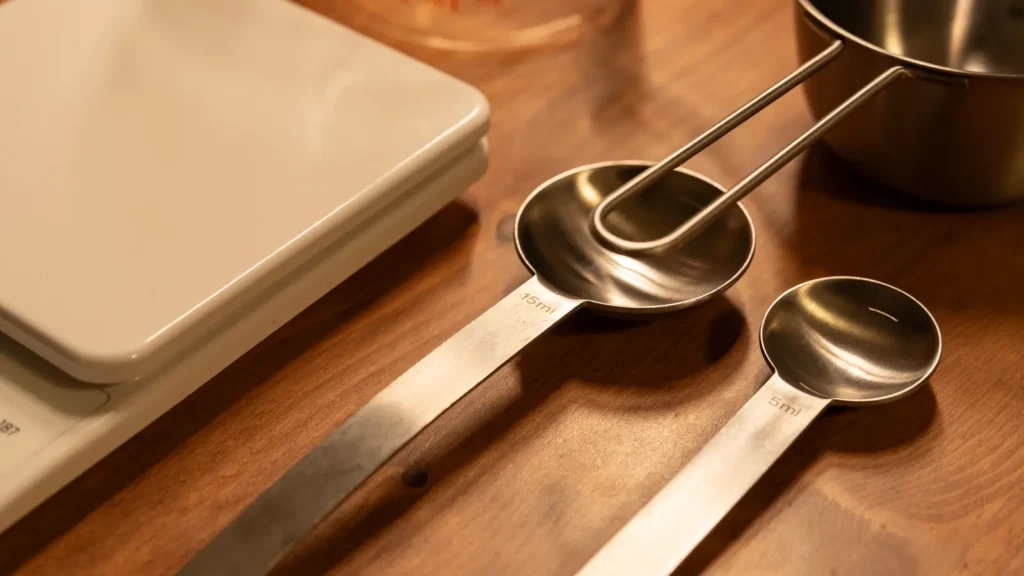
Many recipe cards round a cup to 240 mL and a tablespoon to 15 mL. Those round numbers are close enough for most cooking, and NIST itself lists 15 mL and 5 mL as the everyday values for a measuring tablespoon and teaspoon. For science homework, use the exact values above.
Common length conversions
| US length | Metric |
|---|---|
| 1/8 inch | 3.175 mm |
| 1/4 inch | 6.35 mm |
| 1/2 inch | 12.7 mm |
| 5/8 inch | 15.875 mm |
| 1 inch | 2.54 cm (25.4 mm) |
| 3 1/2 inches | 8.89 cm |
| 1 foot (12 in) | 30.48 cm |
| 1 yard (3 ft) | 91.44 cm |
| 1 mile (5,280 ft) | 1.609 km |
Every value in this table is exact except the mile, which is 1.609344 km before rounding.
Cups to grams depends on the ingredient
A cup measures volume. A gram measures mass. To change one into the other you need to know how heavy the ingredient is for its size, so there is no single answer to “how many grams in a cup.”
The converter offers six ingredients with typical values:
- water
- milk
- all-purpose flour
- granulated sugar
- butter
- honey
Water is the reference: one cup of water weighs about 236 g. Flour weighs roughly half that per cup, while honey is heavier than water. Flour varies most, because a scooped cup packs in more than a spooned and leveled cup. If a recipe gives grams, weighing on a kitchen scale is more accurate than any cup conversion.
Fluid ounces are not the same as ounces
A fluid ounce (fl oz) is a unit of volume: how much space something takes up. An ounce (oz) is a unit of weight. NIST recommends writing “fluid ounce” in full or as “fl oz” whenever the two could be confused.
They match closely only for water and similar liquids. One fluid ounce of water weighs about 29.6 g, a little more than one ounce of weight (28.35 g). For flour, a fluid ounce weighs much less than an ounce. When a recipe says “8 oz of chocolate,” it means weight. When a measuring cup says “8 oz,” it means fluid ounces.
Typing fractions in the length tool
Rulers and tape measures in the US are marked in fractions, so the length tool accepts them directly:
- Type a mixed number with a space: 3 1/2 means three and a half inches.
- Type a simple fraction with a slash: 5/8 means five eighths of an inch.
- Decimals work too: 3.5 gives the same result as 3 1/2.
Use a space, not a hyphen, between the whole number and the fraction. The tool shows the result in millimeters and centimeters so you can read it either way.
More study tools
Need to work out grades instead? Try the GPA calculator. Citing NIST in a lab report? The MLA citation machine builds the Works Cited entry. How we check our numbers is explained in the editorial policy.
Embed this tool
Use the Copy embed code button inside the tool to put it on a class page or blog, with your own preset values.
Questions about converting units
How many mL are in a cup?
One US cup is 236.5882365 mL, usually rounded to 236.6 mL. Many recipes round it to 240 mL, which is fine for cooking.
How many cm are in an inch?
Exactly 2.54 cm. The inch has been defined as 25.4 mm since the international yard and pound agreement of 1959.
How many tablespoons are in a cup?
There are 16 tablespoons in a US cup. A cup is 8 fluid ounces and each fluid ounce is 2 tablespoons.
Is a US cup the same as a metric cup?
No. A US cup is about 236.6 mL. Some countries use a 250 mL metric cup, so recipes from abroad can come out slightly different.
How many grams are in a pound?
One pound is exactly 453.59237 g, so about 453.6 g. There are 16 ounces in a pound, and each ounce is about 28.35 g.