Answer
There are 128 US fluid ounces in 1 US gallon. A gallon is 4 quarts, each quart is 32 fluid ounces, and 4 × 32 = 128. In metric, 1 gallon is about 3.785 liters (3,785.411784 mL exactly). A UK (imperial) gallon is bigger and holds 160 imperial fluid ounces.
The converter below starts at 1 gallon to fluid ounces. Type any amount, or change the units, and it updates as you type.
Ounces in a gallon chart (1 to 10 gallons)
Multiply the number of gallons by 128 to get fluid ounces. The liter column uses the exact factor of 3.785411784 liters per gallon, rounded to three decimals.
| Gallons | US fluid ounces | Liters |
|---|---|---|
| 1/4 | 32 | 0.946 |
| 1/2 | 64 | 1.893 |
| 3/4 | 96 | 2.839 |
| 1 | 128 | 3.785 |
| 2 | 256 | 7.571 |
| 3 | 384 | 11.356 |
| 4 | 512 | 15.142 |
| 5 | 640 | 18.927 |
| 6 | 768 | 22.712 |
| 7 | 896 | 26.498 |
| 8 | 1,024 | 30.283 |
| 9 | 1,152 | 34.069 |
| 10 | 1,280 | 37.854 |
How to convert gallons to ounces, and back
To change gallons to fluid ounces, multiply by 128. To change fluid ounces to gallons, divide by 128. A few examples:
- 2.5 gallons × 128 = 320 fl oz
- 96 fl oz ÷ 128 = 0.75 gallon, or three quarters of a gallon
- 40 fl oz ÷ 128 = 0.3125 gallon, a little under a third
- 1 fl oz ÷ 128 = 0.0078 gallon
If the number of ounces is a multiple of 32, you can also count in quarts: 160 fl oz is 5 quarts, which is 1 gallon and 1 quart. Gallons show up on milk jugs, paint cans, fish tanks and gas pumps in the US, so the 128 rule gets used more often than you might expect, including in math class word problems.
Why a gallon holds 128 ounces
US liquid measures double or quadruple as you go up, so the numbers stack neatly:
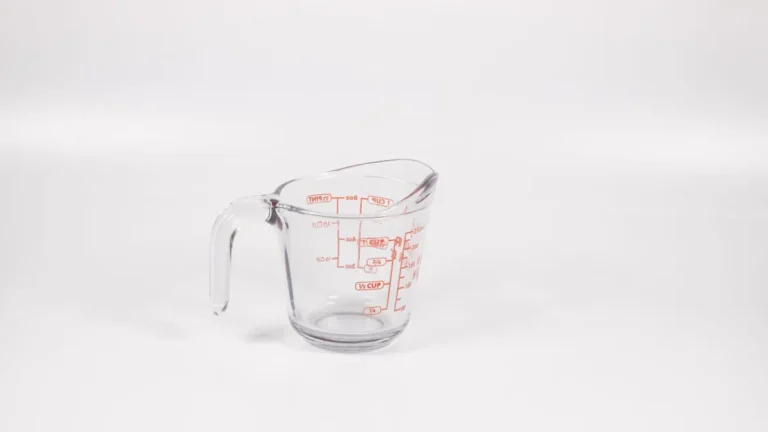
- 1 cup = 8 fluid ounces
- 1 pint = 2 cups = 16 fluid ounces
- 1 quart = 2 pints = 32 fluid ounces
- 1 gallon = 4 quarts = 128 fluid ounces
The US gallon itself is defined as 231 cubic inches. Since an inch is exactly 2.54 cm, that works out to exactly 3,785.411784 mL, and dividing by 128 gives the size of one fluid ounce: 29.5735295625 mL. Both values are listed in NIST Handbook 44, Appendix C.
Half gallon, quarter gallon and other common sizes
A half gallon is 64 fluid ounces, the size of many milk and juice cartons. A quarter gallon is 32 fluid ounces, which is exactly 1 quart, or 4 cups. If you need the cups instead, see how many cups are in a quart.
Worked example
Worked example: how many water bottles fill a gallon jug?
Many water bottles hold 500 mL, and the label says 16.9 fl oz. Here is how many it takes to fill a 1-gallon jug.
- Change the bottle to fluid ounces: 500 ÷ 29.5735295625 = 16.907 fl oz.
- Divide the gallon by one bottle: 128 ÷ 16.907 = 7.57 bottles.
- Check the leftover: 7 full bottles give 118.3 fl oz, so the jug still needs 9.7 fl oz, a bit more than half a bottle.
So it takes about 7½ of these bottles to fill a gallon. With 8 oz glasses the math is simpler: 128 ÷ 8 = 16 glasses.
US gallon vs UK gallon
The UK, or imperial, gallon is exactly 4.54609 liters. It is split into 160 imperial fluid ounces of 28.4130625 mL each. Measured in US fluid ounces, an imperial gallon holds about 153.72. If a recipe or a fuel figure comes from the UK, check which gallon it means before converting.
Fluid ounces are not weight ounces
A fluid ounce measures how much space a liquid takes up. An ounce on a scale measures weight. They share a name but are different units, so a gallon of honey and a gallon of water both hold 128 fluid ounces even though they weigh different amounts. The page on how many grams are in an ounce explains the weight ounce.
Source: NIST Handbook 44 (2026), Appendix C: General Tables of Units of Measurement. The tables on this page were calculated from those exact factors, then rounded.